

Farming is unlike any other sector for tax purposes. The ownership of land, the use of reliefs such as Agricultural Property Relief, fluctuating profits, diversification and succession planning all create a distinct and often complex tax position.
Understanding how these rules apply is essential to protecting the profitability of the business and the long‑term future of the farm. This guide sets out the core tax principles affecting UK farming businesses and landowners, bringing together the key areas that require careful planning and professional advice.
Business Structures: Sole Trader, Partnership or Company?
The legal structure of a farming business affects how profits are taxed, how assets are owned, how succession is managed and how reliefs apply. Many farms operate as sole traders or traditional partnerships, but incorporation is increasingly considered where profits are retained for reinvestment or where liability protection is required.
Sole Trader
A sole trader is taxed on all business profits through Income Tax and Class 4 National Insurance.
- Profits are taxed at personal income tax rates.
- Loss relief and farmers’ averaging may be available.
- The business and the individual are legally the same.
- Succession planning can be more complex if assets are owned personally.
This structure is simple but offers no separation between personal and business risk.
Partnership
Most family farms operate as partnerships.
- Each partner is taxed individually on their share of profits.
- Flexibility in allocating profits between generations.
- Can assist with succession planning and gradual transfer of responsibility.
- Basis period rules now align profits to the tax year.
Partnership agreements are critical to ensure clarity over ownership and profit sharing.
Limited Company
Incorporation creates a separate legal entity.
- Profits are subject to Corporation Tax.
- Full expensing may be available on qualifying expenditure on new plant and machinery.
- Profits can be retained within the company.
- Extraction (salary or dividends) requires planning.
- Inheritance Tax and Capital Gains Tax implications must be carefully considered before incorporation.
Incorporation can provide commercial and tax advantages in certain circumstances, but it is not suitable for every farm. The availability of Agricultural Property Relief (APR) and Business Property Relief (BPR) should always be reviewed before restructuring.
Income Tax & Basis Period Reform
Farming profits are subject to Income Tax, with liability calculated on taxable profits after allowable business expenses and reliefs. Due to the seasonal and volatile nature of agriculture, careful planning around profit timing and reliefs is essential.
Taxation of Profits
Sole traders and partners are taxed on their share of trading profits at personal Income Tax rates, together with Class 4 National Insurance contributions.
Allowable deductions typically include:
- Seed, feed and fertiliser
- Wages and subcontractors
- Machinery repairs and maintenance
- Fuel and power
- Professional fees
- Loan interest (subject to restrictions in some cases)
Capital expenditure is not deducted directly but may qualify for capital allowances.
Basis Period Reform
From the 2024/25 tax year onwards, all sole traders and partnerships are taxed on profits arising in the tax year (6 April to 5 April), regardless of their accounting date.
This replaced the previous “current year basis” rules.
Many farms historically used 30 April year‑ends. These businesses should ensure accounting systems and forecasts reflect the new tax‑year reporting requirements.
Farmers’ Averaging & Loss Relief
Farming profits can fluctuate significantly due to weather, commodity prices and input costs. Specific reliefs are available to help smooth the tax impact of these variations.
Farmers’ Averaging
Individuals carrying on a farming trade can average profits over:
- Two years, or
- Five years (where profit volatility meets the required conditions).
Averaging can reduce overall tax where one year’s profits are significantly higher than others. The election must be made within the normal Self Assessment time limits.
Averaging applies to trading profits only and is not available to companies.
Loss Relief
Where a farming business makes a loss, relief may be available in several ways:
- Offset against other income of the same tax year.
- Carry back against profits of the previous year.
- Carry forward against future profits of the same trade.
Special rules apply to farming losses. If a farming trade makes losses in more than five consecutive tax years, HMRC may restrict sideways loss relief unless the business can demonstrate a reasonable expectation of profit.
Careful forecasting is important to ensure reliefs are claimed efficiently and to avoid unexpected restrictions.
Capital Allowances & Annual Investment Allowance
Capital expenditure on machinery, equipment and certain buildings does not qualify as a normal trading expense. Instead, relief is given through capital allowances.
For farming businesses, capital allowances are often a key tool in managing taxable profits.
Annual Investment Allowance (AIA)
The Annual Investment Allowance provides 100% tax relief on qualifying plant and machinery expenditure, up to the annual limit (£1 million at the time of writing).
Qualifying assets typically include:
- Tractors and combines
- Livestock equipment
- Milking parlours
- Grain handling equipment
- Workshop machinery
AIA is available to sole traders, partnerships and companies.
Writing Down Allowances
Where expenditure exceeds the AIA limit, or where AIA is not claimed, relief is given through annual writing down allowances:
- Main pool assets: 18% per year
- Special rate assets: 6% per year
Special rate assets may include certain integral features of buildings and long‑life assets.
Structures and Buildings Allowance (SBA)
New non‑residential farm buildings may qualify for the Structures and Buildings Allowance, currently giving relief at 3% per year on a straight‑line basis.
This can apply to:
- Grain stores
- Livestock housing
- General-purpose agricultural buildings
Companies and Full Expensing
Companies may benefit from full expensing on qualifying new plant and machinery, allowing 100% relief in the year of expenditure. This relief is not available to unincorporated businesses.
Capital expenditure planning should be aligned with profit forecasts to ensure allowances are used efficiently without creating unnecessary losses.
Herd Basis
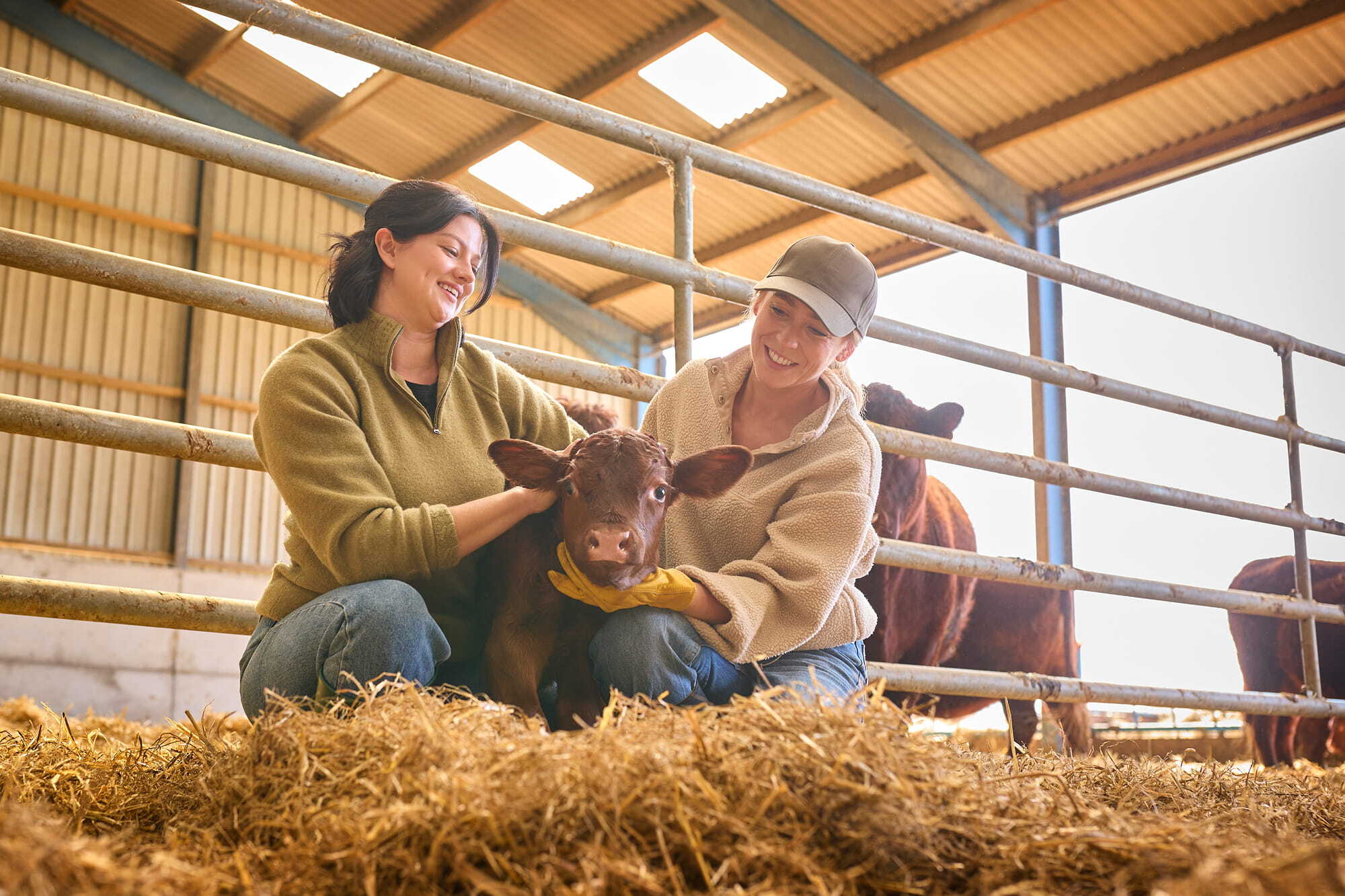
The herd basis is a special tax treatment for farmers who keep a qualifying production herd, such as breeding cattle. Its purpose is to prevent tax being distorted by changes in livestock values where animals are kept for long-term breeding rather than resale.
Where the herd basis applies:
- breeding animals are taken out of normal trading stock rules
- profits are not affected in the same way by changes in herd value
- the net cost of replacing animals in the herd may be allowable for tax
The herd basis only applies where a valid election is made and it is not suitable for every livestock business. It also cannot be used where the cash basis applies. Because the rules are technical, farmers should take advice before making or relying on an election.
VAT for Farmers
VAT is a significant consideration for most farming businesses. The correct treatment depends on turnover, the type of supplies made and whether the business is diversified.
VAT Registration
A farming business must register for VAT if its taxable turnover exceeds the registration threshold. Voluntary registration may also be beneficial where input VAT on costs is significant.
Most food products are zero‑rated, meaning VAT is charged at 0%, but input VAT can still be recovered.
Flat Rate Scheme for Farmers (FRS)
Unregistered farmers can use the Agricultural Flat Rate Scheme.
- A flat rate addition (currently 4%) is added to sales of qualifying agricultural produce and services.
- The farmer cannot reclaim input VAT on purchases.
- The scheme is designed to compensate for VAT incurred on costs.
The scheme is not suitable where input VAT is high, such as during periods of capital investment.
Diversification and Partial Exemption
Many farms have diversified activities, such as:
- Holiday accommodation
- Farm shops
- Livery services
- Renewable energy generation
Some activities are standard‑rated, some zero‑rated and others exempt. Where exempt supplies are made (for example, certain property lettings), the business may become partially exempt and restricted in recovering input VAT.
Careful structuring is often required to avoid unexpected VAT costs.
Land and Property
The sale or lease of land is normally exempt from VAT, unless an option to tax has been exercised. This can have significant implications for development land, commercial lets and farm building conversions.
VAT errors can be costly and are a frequent source of HMRC enquiry. Regular review of VAT treatment is advisable, particularly where the business structure or activities change.
Making Tax Digital (MTD) for Income Tax
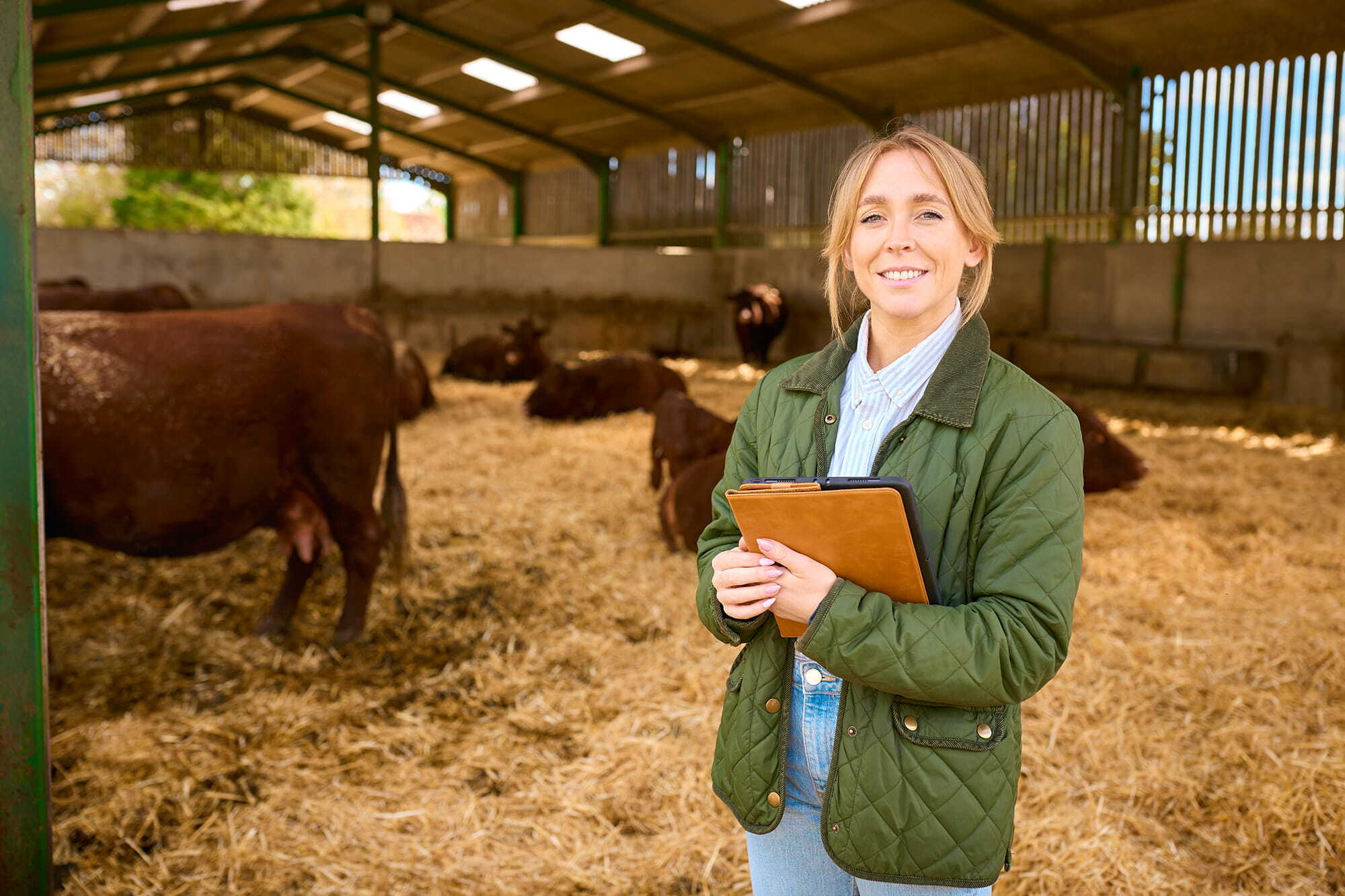
Making Tax Digital for Income Tax introduces mandatory digital record-keeping and quarterly reporting for many sole traders and landlords. It begins in phases from 6 April 2026.
Who is affected?
From 6 April 2026, MTD for Income Tax applies to individuals whose total qualifying income from self-employment and property is more than £50,000. This will commonly include:
- Sole trader farming businesses
- Individual landowners with property income
- Other individuals with qualifying self-employment and/or property income above the threshold
From 6 April 2027, the rules extend to individuals with qualifying income of more than £30,000. The government has also confirmed that MTD for Income Tax will be extended to those with qualifying income over £20,000 from 6 April 2028.
General partnerships are not mandated into MTD for Income Tax from April 2026. HMRC has said partnerships will be brought within the regime at a later date, with the timetable to be announced separately.
Companies are not within MTD for Income Tax. HMRC has also stated that it does not intend to introduce MTD for Corporation Tax, so limited companies are not being brought into a separate MTD for CT regime.
What is required?
Those within scope must:
- keep digital records using compatible software
- submit quarterly updates of income and expenses to HMRC
- submit an end of period statement to finalise business income
- submit a final declaration to confirm total taxable income for the year
This replaces the single annual Self Assessment process for those who are required to use MTD for Income Tax.
Practical implications for farmers
Farming businesses and landowners who still rely on manual or non-digital records may need to update their bookkeeping systems and software before mandation begins. Early preparation should make compliance easier and reduce disruption, especially where accounting dates do not align neatly with the tax year.
Environmental Schemes and Natural Capital
As farming support continues to shift towards environmental land management, many farms now receive income through schemes, habitat agreements and other natural capital arrangements. These payments can have important consequences for Income Tax, Capital Gains Tax and Inheritance Tax, so the tax position should be reviewed before agreements are entered into.
Environmental Scheme Payments
Payments under schemes such as the Sustainable Farming Incentive, Countryside Stewardship and similar arrangements are often taxable. In many cases, where the agreement remains part of the farming business, the receipts are likely to be treated as trading income. However, the treatment will depend on the terms of the agreement and how the land is being used.
The tax position can affect:
- whether receipts are treated as trading or property income
- whether the land continues to qualify for Agricultural Property Relief
- whether Business Relief may still be available for Inheritance Tax purposes
Land entered into qualifying environmental management agreements can still qualify for Agricultural Property Relief, which is an important protection where land is taken out of production for environmental purposes.
Woodland and Timber
Commercial woodland has its own tax treatment. Income from the sale of timber from commercial woodlands is generally exempt from Income Tax and Corporation Tax. A growing timber crop is also generally outside Capital Gains Tax, although this exemption applies to the timber itself and not to the land on which it grows.
For Inheritance Tax, the position is more nuanced. Commercial woodland does not qualify for Agricultural Property Relief simply by being woodland. Depending on the circumstances, Woodlands Relief may apply to the value of the timber, and Business Relief may also be relevant in some cases. The land itself must be reviewed separately.
Natural Capital and Emerging Markets
Income from carbon arrangements, biodiversity net gain agreements, nutrient mitigation and similar natural capital projects is still an evolving area. The tax treatment will depend on how the agreement is structured and whether the activity forms part of the farming trade, a separate business activity or a property arrangement.
Because these agreements can run for many years and may change the use of land, they should also be reviewed carefully for their effect on Capital Gains Tax and Inheritance Tax reliefs, including APR and Business Relief. Professional advice should be taken before entering into significant long-term arrangements.
Diversification & Property Income

Diversification is now a core part of many farming businesses. While it can strengthen income and spread risk, it also changes the tax profile of the farm.
The structure and scale of diversified activities must be considered carefully.
Trading vs Property Income
A key distinction is whether an activity is treated as a trading business or as property investment.
Examples of diversified activities include:
- Farm shops and cafés
- Livery yards
- Contracting services
- Holiday accommodation
- Commercial unit lettings
- Solar or renewable energy projects
Trading activities are generally subject to Income Tax or Corporation Tax in the usual way and may qualify for Business Property Relief (BPR).
By contrast, passive property letting is usually treated as investment activity and may not qualify for BPR. This can significantly affect Inheritance Tax exposure.
Holiday Accommodation
Following the abolition of the Furnished Holiday Lettings (FHL) regime, furnished holiday properties are now taxed under the standard property income rules.
This means:
- Profits are treated as property income rather than trading income.
- Capital allowances are generally no longer available (except in limited cases).
- Income does not qualify as relevant earnings for pension purposes.
The Inheritance Tax position should be reviewed carefully, particularly where holiday accommodation forms a material part of the business.
Renewable Energy and Land Use
Solar arrays, battery storage and similar projects may generate either trading or rental income, depending on how they are structured. The impact on VAT, Capital Gains Tax and Inheritance Tax reliefs should be assessed before agreements are finalised.
Diversification can strengthen a farming business, but poorly structured arrangements can inadvertently restrict valuable tax reliefs.
Capital Gains Tax on Land and Farms
Capital Gains Tax (CGT) can arise when farmland, buildings or other chargeable assets are sold, gifted or otherwise disposed of at a gain. For many farming businesses, rising land values mean CGT is an important part of long-term tax planning.
When CGT May Apply
CGT may arise on:
- the sale of farmland or development land
- the disposal of farm buildings
- the sale of part of a holding
- transfers of land into or out of a partnership
- gifts of land, which are usually treated as disposals at market value for tax purposes
The gain is broadly calculated by taking the disposal value and deducting the original cost, together with any allowable costs and available reliefs.
Business Asset Disposal Relief (BADR)
Where qualifying business assets are disposed of, Business Asset Disposal Relief may reduce the rate of Capital Gains Tax. For qualifying disposals made on or after 6 April 2026, the BADR rate is 18%. This relief is subject to conditions and lifetime limits, so it will not apply in every case.
Whether BADR is available will depend on factors such as:
- the type of asset being disposed of
- how long it has been owned
- whether it forms part of a qualifying trading business
Holdover and Rollover Relief
In some cases, CGT can be deferred rather than paid immediately.
Gift Hold-Over Relief may apply where qualifying business assets are gifted or transferred for less than market value, allowing the gain to pass to the recipient until they dispose of the asset.
Business Asset Rollover Relief may apply where proceeds from the disposal of qualifying business assets are reinvested into new qualifying business assets, delaying the gain until the replacement asset is sold.
These reliefs are often relevant in succession planning, business restructuring and reinvestment.
Development Land
Land with development potential can create large gains and more complex tax exposure. Overage agreements, option agreements and promotion agreements should always be reviewed carefully before contracts are signed, as the structure and timing can affect the eventual tax position. Early advice is often critical.
Stamp Duty Land Tax on Agricultural Property
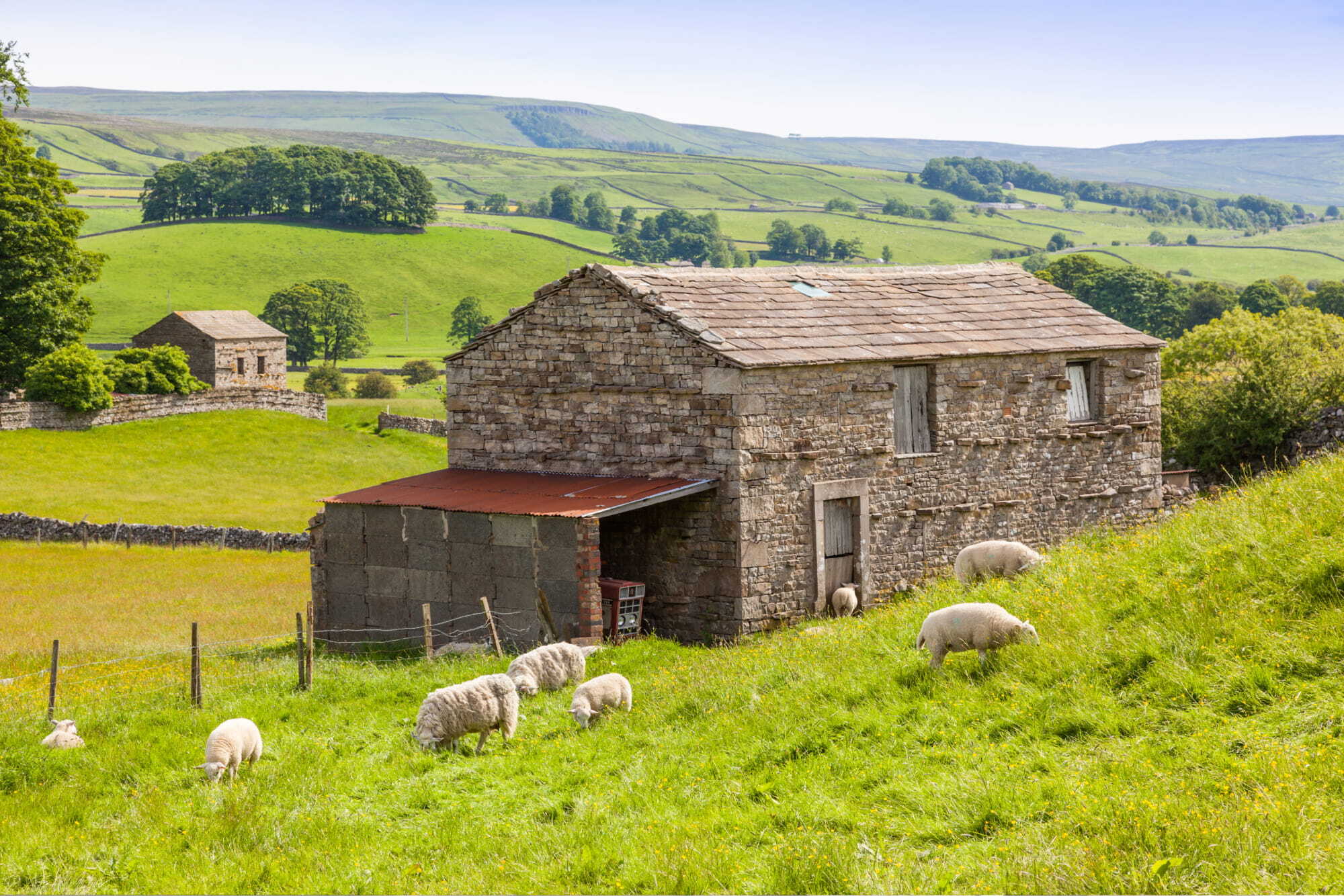
Stamp Duty Land Tax (SDLT) is payable on the acquisition of land and property in England and Northern Ireland. The rules can be complex where agricultural property includes residential elements or mixed use.
Agricultural and Mixed‑Use Property
Pure agricultural land is generally treated as non‑residential property for SDLT purposes.
Where a transaction includes both residential and non‑residential elements, for example, farmland with a farmhouse, the purchase may qualify as mixed‑use, meaning non‑residential SDLT rates apply. These rates are often lower than residential rates.
Correct classification is critical, as the SDLT cost difference can be significant.
Farmhouses and Dwellings
Where land is purchased with one or more dwellings:
- Residential rates may apply if the transaction is not genuinely mixed‑use.
- Higher rates may apply in certain circumstances.
The facts of occupation and use at the time of purchase are important in determining treatment.
Partnerships and Incorporation
Special SDLT rules apply where:
- Land is transferred into or out of a partnership.
- A farming business incorporates and land is transferred to a company.
These rules are technical and can produce unexpected SDLT charges if not structured correctly.
Given the high value of agricultural land, SDLT should always be considered early in any acquisition or restructuring.
Inheritance Tax: Agricultural Property Relief (APR) & Business Property Relief (BPR)

Inheritance Tax (IHT) is often one of the most significant long-term tax issues for farming families. Agricultural Property Relief (APR) and Business Property Relief (BPR) remain central to farm succession planning, but the rules changed from 6 April 2026.
Agricultural Property Relief (APR) and Business Property Relief (BPR)
Qualifying agricultural and business property can still benefit from valuable Inheritance Tax reliefs. However, from 6 April 2026, a £2.5 million combined allowance applies to property qualifying for 100% APR and/or 100% BPR. Any qualifying value above that amount generally receives relief at 50%, rather than 100%.
APR may apply to the agricultural value of qualifying property such as:
- agricultural land and pasture
- farm buildings
- farmhouses, where the conditions are met
- certain qualifying environmental land
APR applies only to the agricultural value of the property. Any development value or hope value may fall outside the relief.
BPR may apply to qualifying business property such as:
- a farming business
- partnership interests
- shares in a farming company
- certain diversified trading activities
BPR is generally not available where the business consists wholly or mainly of investment activity, such as passive property letting.
Interaction Between APR and BPR
APR is considered first. Where APR does not fully relieve the value, BPR may apply to the balance if the business and the asset qualify. This can be particularly relevant where land has development value or where the farm includes diversified trading activities.
Changes in land use, diversification and business structure can all affect eligibility. Regular review is essential to help preserve reliefs and avoid unexpected exposure to IHT.
Succession Planning After the Allowance
The new £2.5 million combined allowance means larger farming estates may now face a greater Inheritance Tax exposure than under the previous rules. Any unused allowance can be transferred to a surviving spouse or civil partner, so ownership structures, wills and lifetime gifting plans should be reviewed carefully to ensure reliefs are preserved and succession plans remain tax efficient.
Succession Planning and Lifetime Transfers
Effective succession planning is essential to preserving both the farming business and the reliefs available to it. Following the April 2026 changes to APR and BPR, early and structured planning is more important than ever for farming families with high-value land and business assets.
Lifetime Gifting
Transferring assets during lifetime can begin the transition to the next generation and remove future growth from the taxable estate. Gifts are generally treated as disposals for Capital Gains Tax purposes, although holdover relief may defer the gain where qualifying business assets are transferred.
For Inheritance Tax, lifetime gifts are usually treated as potentially exempt transfers (PETs). If the donor survives seven years, the gift falls outside the estate, subject to the usual anti-avoidance rules.
Use of Partnerships
Many farming families introduce the next generation into the partnership over time. This can allow a gradual transfer of capital value and responsibility without fragmenting land ownership. It can also provide flexibility in profit sharing and succession planning.
Partnership agreements should clearly reflect capital ownership, decision-making arrangements and the long-term intentions of the family.
Trust Planning
Trusts may be appropriate in some situations, particularly where asset protection, controlled succession or more complex family arrangements need to be considered. However, trust taxation is technical and should be reviewed carefully before any structure is put in place.
Wills and Ongoing Review
A current and properly drafted will is essential. Ownership structures, partnership agreements and testamentary wishes should be reviewed regularly to ensure they still align.
Succession planning is not a one-off exercise. It should be reviewed as land values, tax rules and family circumstances change.
Key Deadlines & Practical Planning Points
Agricultural taxation is shaped not only by legislation, but by timing. Missing elections, relief claims or reporting deadlines can lead to unnecessary tax costs.
Self Assessment
31 January Online filing deadline and payment of any balance of Income Tax and Capital Gains Tax.
31 July Second payment on account (where applicable).
Elections such as farmers’ averaging must be made within the relevant filing deadlines.
Capital Allowances and Relief Claims
Claims for:
- Annual Investment Allowance
- Writing Down Allowances
- Rollover or holdover relief
must generally be made within the statutory time limits following the end of the relevant tax year.
Inheritance Tax Planning
Reliefs such as APR and BPR depend on:
- Ownership periods
- Use of the land
- The trading status of the business
Regular review is advisable, particularly where land use changes, diversification increases, assets are transferred, or partnership structures are altered.
Before Major Decisions
Professional advice should always be sought before:
- Selling or gifting land
- Entering development or option agreements
- Incorporating the business
- Granting long‑term leases
- Entering significant environmental or natural capital arrangements
Early planning typically preserves more options than retrospective correction.
How Ryans Can Help

Agricultural tax is rarely straightforward. Between fluctuating profits, land ownership, diversification, succession planning and changing relief rules, it can be difficult to stay on top of everything while also running the day-to-day operations of a farming business.
At Ryans Chartered Accountants, we support farmers and landowners with practical, tailored advice that goes beyond year-end compliance. We can help you understand how your business structure affects tax, make the most of available reliefs, plan for succession, and review the tax impact of major decisions before they become costly mistakes.
Our support can include:
- annual accounts and tax returns
- advice on sole trader, partnership and company structures
- capital allowances and profit planning
- VAT support for farming and diversified activities
- succession planning and lifetime gifting strategies
- APR and BPR reviews
- CGT planning on land, buildings and business assets
- guidance on diversification, environmental schemes and natural capital arrangements
Whether you are planning ahead for the next generation, reviewing a change in business structure, or simply want confidence that your tax position is being handled properly, Ryans can provide clear, proactive support shaped around your farming business.
For advice tailored to your farm, land or rural business, get in touch with Ryans Chartered Accountants.
FAQ's
What tax reliefs are available to farmers in the UK?
Farmers may be able to claim a range of tax reliefs depending on how the business is structured and what assets it owns. Common examples include farmers’ averaging, loss relief, capital allowances, Agricultural Property Relief (APR), Business Property Relief (BPR), and, in some cases, herd basis treatment.
Contact UsDo farmers pay Capital Gains Tax on farmland?
Yes, Capital Gains Tax can apply when farmland, buildings or other farm assets are sold or gifted at a gain. Reliefs such as Hold-Over Relief or Rollover Relief may be available in some cases, depending on the asset and the circumstances.
Contact UsWhat is Agricultural Property Relief?
Agricultural Property Relief is an Inheritance Tax relief that can apply to the agricultural value of qualifying farmland, pasture, farm buildings and some farmhouses. It does not usually cover development value or hope value.
Contact UsWhat is Business Property Relief for farmers?
Business Property Relief can reduce Inheritance Tax on qualifying business assets, such as a farming business, partnership interest or shares in a farming company. It is less likely to apply where the activity is mainly investment-based, such as passive property letting.
Contact UsHow does the £2.5 million APR and BPR allowance work?
From 6 April 2026, a £2.5 million combined allowance applies to property qualifying for 100% APR and/or 100% BPR. Qualifying value above that level generally receives relief at 50% rather than 100%.
Contact UsCan a farm qualify for both APR and BPR?
Yes, in some cases both reliefs may be relevant. APR is considered first, and if it does not fully relieve the value, BPR may apply to the balance where the business and asset qualify.
Contact UsDo farmers still need to use Self Assessment?
Yes. Sole traders and partners in farming businesses generally still report their profits through Self Assessment. However, some individuals will also need to comply with Making Tax Digital for Income Tax from April 2026 onwards.
Contact UsWhen does Making Tax Digital start for farmers?
Making Tax Digital for Income Tax starts from 6 April 2026 for individuals with qualifying self-employment and property income above £50,000. It then extends to those above £30,000 from 6 April 2027 and above £20,000 from 6 April 2028.
Contact UsCan farmers use the cash basis and the herd basis together?
No. A farmer cannot usually use the herd basis if the cash basis is being used to calculate profits.
Contact UsWhat is farmers’ averaging?
Farmers’ averaging is a tax relief that allows qualifying farmers to average profits over two years or, in some cases, five years. It is designed to help smooth the tax impact of fluctuating farming profits.
Contact UsCan farmers claim capital allowances on machinery?
Yes. Farmers can usually claim capital allowances on qualifying plant and machinery, such as tractors, combines, milking equipment and workshop machinery. Many businesses can also use the Annual Investment Allowance for upfront relief.
Contact UsDo farmers need to register for VAT?
A farming business must register for VAT if its taxable turnover goes above the registration threshold. Some farms choose to register voluntarily where input VAT on costs is significant.
Contact UsWhat is the Agricultural Flat Rate Scheme?
The Agricultural Flat Rate Scheme allows qualifying unregistered farmers to add a flat rate percentage to sales of agricultural produce and services. It is designed to compensate for VAT on costs, but farmers using the scheme cannot reclaim input VAT.
Contact UsAre environmental scheme payments taxable?
Often, yes. Payments under schemes such as the Sustainable Farming Incentive or Countryside Stewardship are commonly taxable, but the exact treatment depends on the agreement and how the land is being used.
Contact UsIs woodland taxed differently from farmland?
Yes. Commercial woodland has its own tax treatment. Income from timber sales is generally exempt from Income Tax and Corporation Tax, and growing timber is usually outside Capital Gains Tax, although the land itself is treated separately.
Contact UsDoes farm diversification affect tax?
Yes. Diversification can change how income is taxed and may affect VAT, Capital Gains Tax and Inheritance Tax reliefs. A key issue is whether the activity is treated as trading income or investment income.
Contact UsAre holiday lets on farms still taxed under the Furnished Holiday Lettings rules?
No. Following the abolition of the Furnished Holiday Lettings regime, furnished holiday accommodation is now generally taxed under standard property income rules.
Contact UsDo farmers pay Stamp Duty Land Tax on agricultural land?
Yes, SDLT can apply when agricultural land is bought in England or Northern Ireland. The treatment depends on whether the purchase is non-residential, residential or mixed-use.
Contact UsIs succession planning important for farming families?
Yes. Succession planning is one of the most important parts of farm tax planning because it can affect Inheritance Tax, Capital Gains Tax, business continuity and access to reliefs such as APR and BPR.
Contact UsWhen should a farmer get tax advice?
Tax advice is most important before major decisions such as selling land, gifting assets, incorporating the business, entering environmental agreements, granting leases or restructuring ownership.
Contact Us